Kawasaki Ninja ZX-6R Review: The Supersport Survivor Still Thrills
The Kawasaki Ninja ZX-6R keeps the 600 supersport flame alive with a screaming 636cc four and a track-capable chassis. We review the survivor, and where it shows its age.
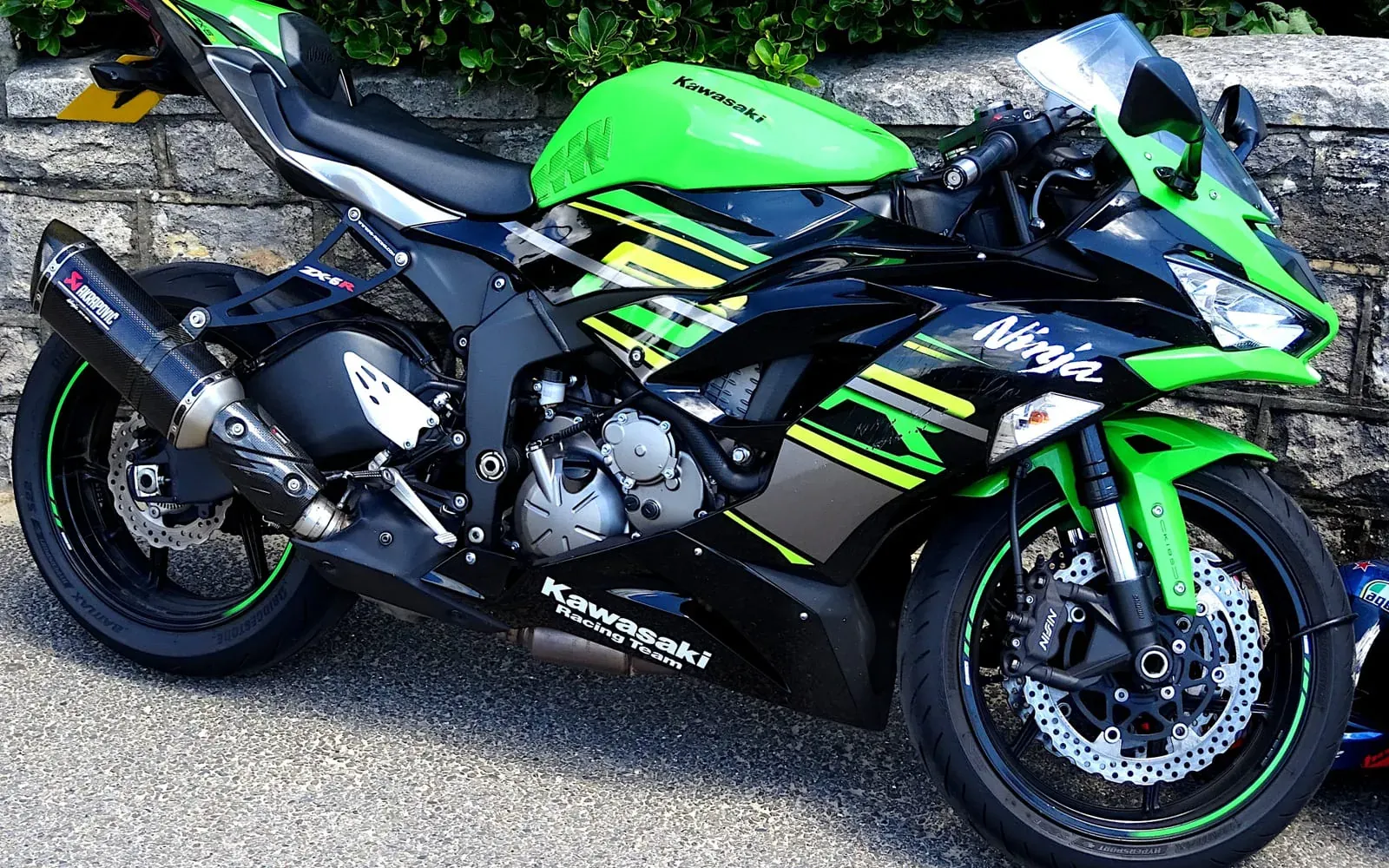
While most of the industry quietly walked away from the supersport class, Kawasaki kept the faith. The Ninja ZX-6R is one of the last true 600-class fours standing, and rather than soften it into a road-friendly compromise, Kawasaki has kept it exactly what it always was: a high-revving, track-bred sportbike that asks something of you and rewards you handsomely when you deliver. In an era of sensible, road-first supersports, the ZX-6R is a glorious throwback.
The 636 advantage
The ZX-6R has always cheated, in the best way. Where rivals ran strict 599cc fours, Kawasaki's 636cc inline-four uses that extra capacity to plug the midrange hole that made pure 600s so frustrating on the road. It makes a claimed 127 hp at 13,000 rpm and 70.8 Nm of torque at 10,800 rpm, and the result is an engine that pulls harder in the middle than its rivals while still screaming to a high redline up top.
It is a thrilling motor. There is real drive out of corners, a spine-tingling intake howl as the revs climb, and the sense that there is always more to give. This is the supersport experience in its purest form.
The 636 gives the ZX-6R the one thing pure 600s always lacked: midrange you can actually use, without losing the top-end scream.
A chassis built for the track
Underneath, the ZX-6R remains a serious piece of kit. It runs a 41mm Showa SFF-BP fork and an adjustable Uni-Trak monoshock, both with proper adjustability, and twin 310mm front discs with radial calipers backed by ABS. At a claimed 198 kg it is light and flickable, and on a track or a fast, smooth road it is sublime: stable, precise and endlessly confidence-inspiring.
The flip side is that this focus comes at a cost to comfort. The 830mm seat and committed, sporty riding position are fine for a back-road blast or a track day, but they ask more of you on a long commute than the new breed of road-first supersports.
Where it shows its age
The ZX-6R's biggest weakness is not its hardware but its software. The electronics package feels dated next to newer rivals, with a relatively basic suite where some competitors now offer IMU-based cornering aids. It is also pricier than the road-first newcomers. None of that dulls the riding experience, but it is worth knowing what you are buying: a brilliant analogue-feeling sportbike rather than a tech showcase.
Key specs
| Spec | Detail |
|---|---|
| Engine | 636cc liquid-cooled inline-four |
| Power | 127 hp @ 13,000 rpm |
| Torque | 70.8 Nm @ 10,800 rpm |
| Suspension | 41mm Showa SFF-BP fork, adjustable Uni-Trak monoshock |
| Brakes | Dual 310mm discs, radial 4-piston front, ABS |
| Seat height | 830 mm |
| Weight | ~198 kg |
| Tank | 17 litres |
| Price | from $11,299 (US) |
Verdict
The ZX-6R is the last of a dying breed, and it still delivers the high-revving, hard-charging thrill that made the supersport class great. The 636cc engine remains a gem, the chassis is genuinely track-capable, and the whole bike has a focused, analogue purity that the newer road-first machines deliberately soften. It is showing its age on electronics and it asks more of you on the road, but as a pure sporting experience it remains hard to beat. See how it compares to the new wave in our best middleweight supersports guide.